
 Click to enlarge
 Provider runtime overview
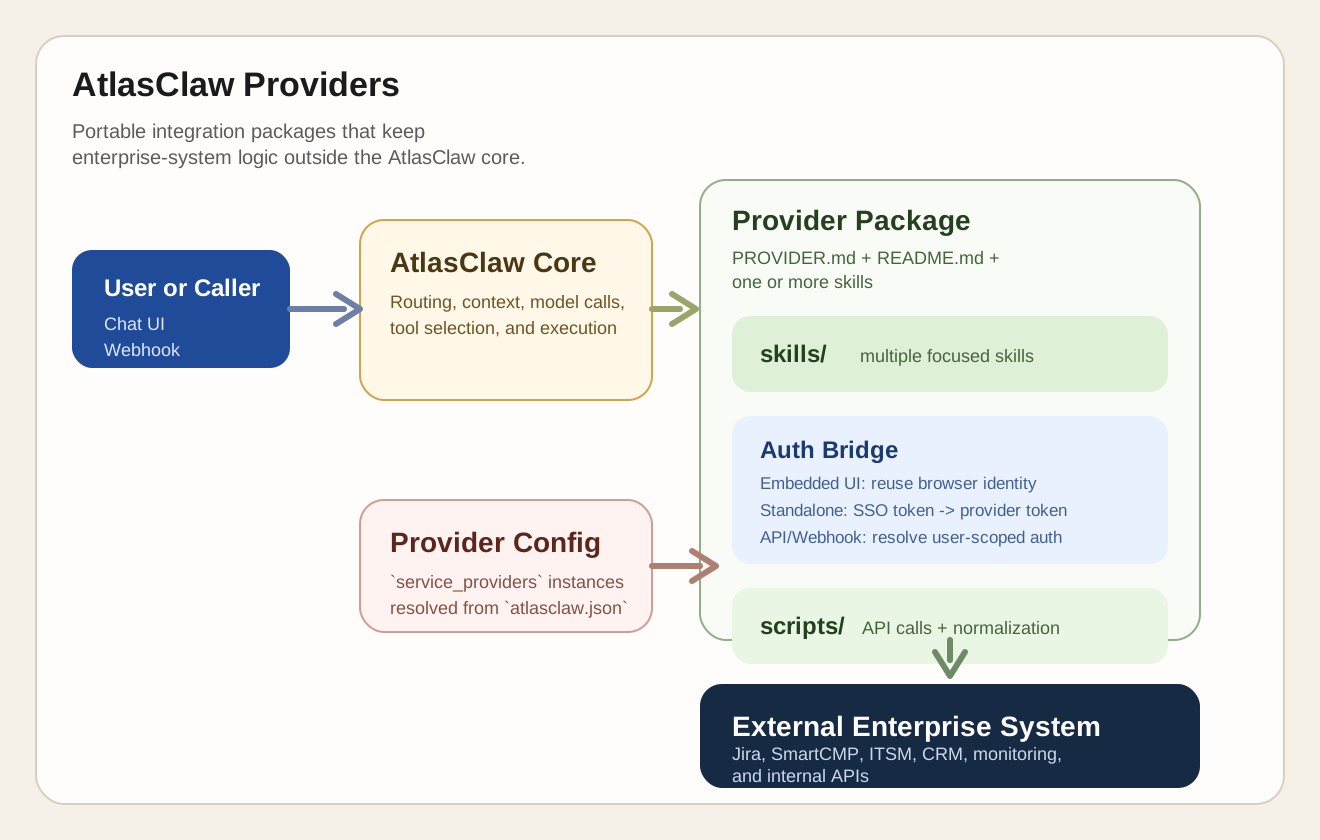
The provider keeps auth, skills, scripts, and downstream execution inside one explicit boundary.
AtlasClaw turns integrations into provider contracts so IM, web, embedded apps, and webhook calls can reach one agent layer, execute skills, and interact with governed enterprise systems.
This diagram shows more clearly how auth, skills, scripts, and downstream system execution are held inside the provider boundary.
Click to enlarge The provider keeps auth, skills, scripts, and downstream execution inside one explicit boundary.
The provider keeps auth, skills, scripts, and downstream execution inside one explicit boundary.
AtlasClaw is designed so integrations stay explicit. Providers hold system contracts, skills stay executable and narrow, and the core keeps one reusable orchestration model.
Each integration owns its auth model, scripts, references, and system-specific rules instead of leaking them into the core.
Skills are the governed execution boundary between user intent and target-system action.
IM, web, embedded modules, and webhook callers can all reach the same AtlasClaw execution model.
Traditional products can call AtlasClaw as an AI layer instead of implementing their own agent stack from scratch.
The integration model stays readable because every hop has a clear responsibility boundary.
A provider is a self-contained integration package: connection contract, auth conventions, skills, scripts, and reference material. The core loads providers from `providers_root` and exposes provider-qualified skills for runtime dispatch.
This model is not just about connecting APIs. It creates one governed AI execution layer above existing systems.
The same integration architecture can be applied across operational systems, business systems, and developer systems.
A strong provider reference showing request flows, approvals, webhook orchestration, and business-facing skill layers.
View referenceA concrete provider example for issue operations and provider wiring patterns.
View referenceService and request workflows can be executed through governed providers instead of ad hoc tool calls.
Alerts, incidents, and operational diagnostics can be exposed as explicit skills.
Business-side workflows can gain AI coordination while keeping system-side permissions and approvals intact.
Development workflows can be integrated as provider domains instead of bolted-on personal-agent tools.
Use the SmartCMP and Jira examples as reference points, then package your own platform with provider-level config, skill metadata, and narrow scripts. Contributions of new system integrations are welcome in the atlasclaw-providers repository.