
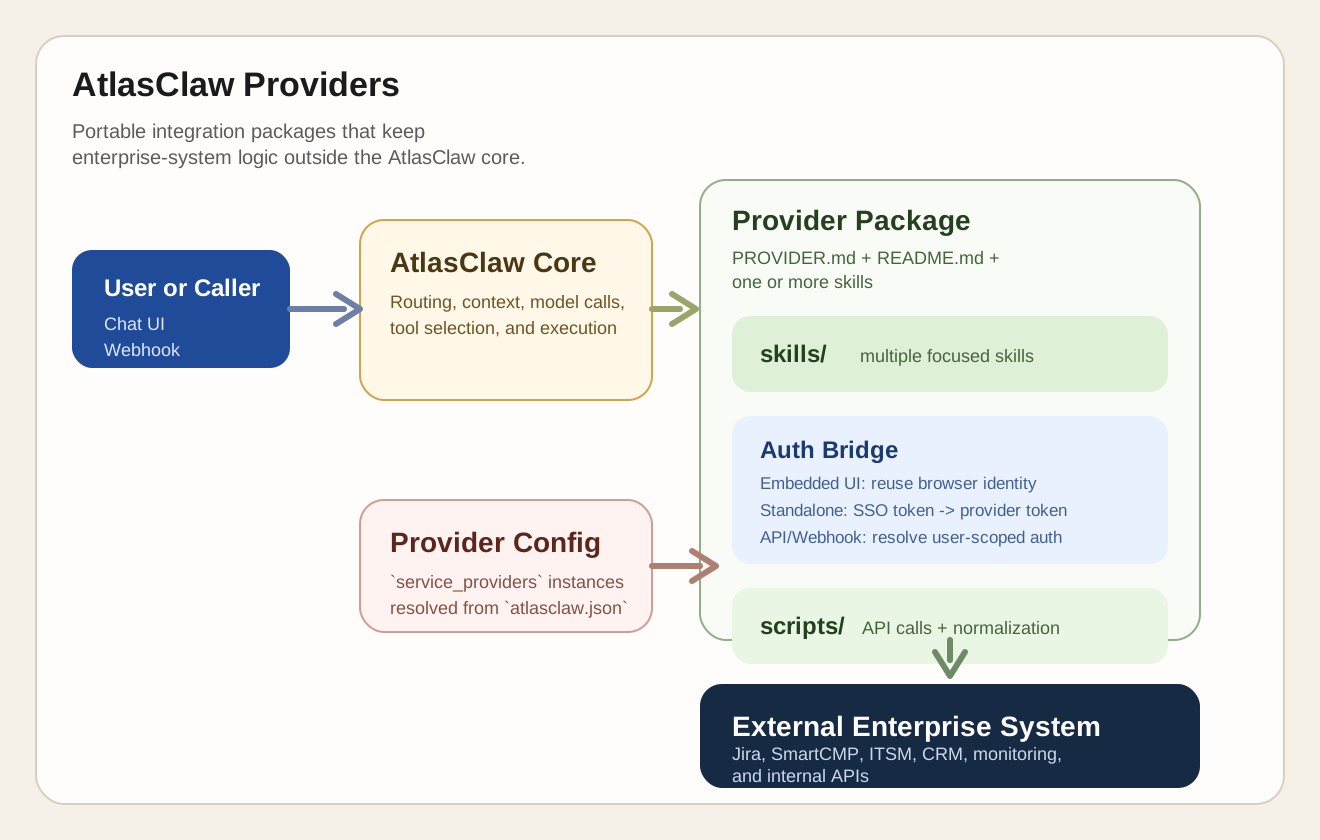
 Click to enlarge
 Provider runtime overview
The Provider keeps auth, Context, typed domain operations, thin Skill adapters, and downstream execution inside one explicit boundary.
AtlasClaw turns integrations into provider contracts so IM, web, embedded apps, and webhook AI integration calls can reach one multi-user AI agent layer. Configured Providers can also map Enterprise System pages to live business objects and governed actions.
This diagram shows how configuration schema, auth and Context, thin Skills, typed domain operations, and downstream execution fit inside the Provider boundary.
Click to enlarge The Provider keeps auth, Context, typed domain operations, thin Skill adapters, and downstream execution inside one explicit boundary.
The Provider keeps auth, Context, typed domain operations, thin Skill adapters, and downstream execution inside one explicit boundary.
AtlasClaw is designed so integrations stay explicit. Providers hold system contracts, Skills stay executable and narrow, and the core keeps one reusable orchestration model for governed execution.
Each provider-based integration owns its configuration schema, auth model, reusable domain rules, thin adapters, and references instead of leaking them into the core.
Skills are the governed execution boundary between user intent and target-system action.
IM, web, embedded modules, and webhook callers can all reach the same AtlasClaw execution model.
Traditional products can call AtlasClaw as a webhook AI integration layer instead of implementing their own agent stack from scratch.
Deterministic routes map an Enterprise System page to its current domain object, available actions, and the Provider capability that understands it.
The integration model stays readable because every hop has a clear responsibility boundary.
A Provider is a self-contained integration package: metadata and configuration schema, auth conventions, reusable domain code, thin Skill adapters, optional page Context, and reference material. Core loads Providers from `providers_root` and exposes provider-qualified Skills for runtime dispatch.
This model is not just about connecting APIs. It creates one governed AI execution layer above existing systems.
The same provider-based integration architecture can be applied across operational systems, business systems, developer systems, SmartCMP, and Jira.
A versioned SmartCMP Provider reference with typed domain operations, page-aware requests and approvals, governed resource lifecycles, Security workflows, and read-only editor assistance.
View referenceA Jira provider example for issue operations, provider-qualified skills, and enterprise agent wiring patterns.
View referenceService and request workflows can be executed through governed providers instead of ad hoc tool calls.
Alerts, incidents, and operational diagnostics can be exposed as explicit skills.
Business-side workflows can gain AI coordination while keeping system-side permissions and approvals intact.
Development workflows can be integrated as provider domains instead of bolted-on personal-agent tools.
Use the SmartCMP and Jira examples as reference points, then package your own platform with provider metadata, configuration schema, reusable domain operations, and thin Skill adapters. Contributions of new system integrations are welcome in the atlasclaw-providers repository.